Master the shift from wood-mimicking frames to non-combustible structural steel for modern commercial projects.
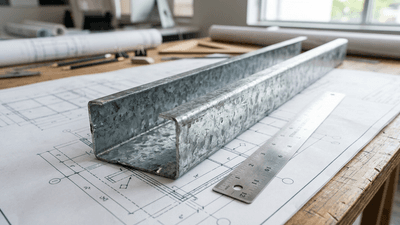
This seven-hour course examines cold-formed steel frame design for small commercial buildings, starting with an overview of the uses of cold-formed steel and how it compares to structural steel design and wood design. The course utilizes the American Iron and Steel Institute (AISI) design manual and dives deep into the designs of specific components. The course also identifies and discusses the stresses and modes of failure which can affect a cold-formed steel frame building.
Exploring the entire structural load path, the curriculum covers the mechanics and behavior of lightweight steel, alongside the design of load-bearing walls, floor joists, roof trusses, and essential connection details. The material dives into current building codes, lateral and gravity load considerations, and practical detailing strategies that optimize both structural integrity and constructability. From retail spaces to small office layouts, this overview illuminates the best practices for engineering durable, code-compliant cold-formed steel frameworks while navigating the unique architectural demands of the commercial sector.

Online Courses for Engineers
HalfMoon Education is a nonprofit continuing education provider offering live webinars and on-demand courses for engineers, architects, landscape architects, land surveyors, attorneys, paralegals, accountants and others. Since 1996, we’ve helped thousands of professionals nationwide stay current with industry standards and codes, earn CE hours, and advance their expertise through practical, expert-led learning experiences. Learn more about us at: www.halfmoonseminars.org

Structural Engineer in Summerville, SC
Mr. Brislin has been a professional engineer for more than 21 years and has designed many structures and performed many different types of analysis in that time. He has worked for a steel fabricator, an architectural/engineering firm, and a seismic consultant, and has been in private practice for over 13 years. Mr. Brislin earned his BSCE degree from The Citadel in Charleston, South Carolina, and his MSCE degree from the University of South Carolina. He has completed all his course work for his PhD degree but has not completed his dissertation; his graduate study work has been in mathematical elasticity. Mr. Brislin has worked on a wide variety of projects from arenas such as Gund Arena in Cleveland, Ohio, and the Edward Jones Dome in St. Louis, Missouri, to the renovation and seismic retrofit of the South Carolina State House and the design of the Columbia Museum of Art. He has performed stress analysis on weapons systems for the Department of Defense and has consulted on cellular telephone concealment projects. Mr. Brislin’s company routinely performs modal analysis of structures to provide more accurate seismic loads and to reduce the cost of seismic requirements through more advanced analysis techniques. The company is knowledgeable concerning structural dynamics and can perform a full dynamic analysis for complicated structures, and ductility requirements in concrete and masonry, as well as welded steel moment connection requirements on the toughness of steel.
